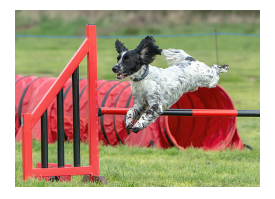
Yesterday, we went to an Agility for All (A4A) show, and it was one of those days that truly brought out the highs and lows of training, competition, and the mindset behind it all.
Quest, my young dog, had some massive wins. He played in the ring during his NFC agility run, which was a huge milestone for us. Over the past few years, we’ve worked hard on his toy play to enable me to do NFC runs with him, and seeing him engaged with the toy in the ring was a massive accomplishment. There was a time when, due to overwhelm, he wouldn’t even eat food, let alone play with a toy in the ring. The fact he did it so confidently yesterday was something to be proud of.
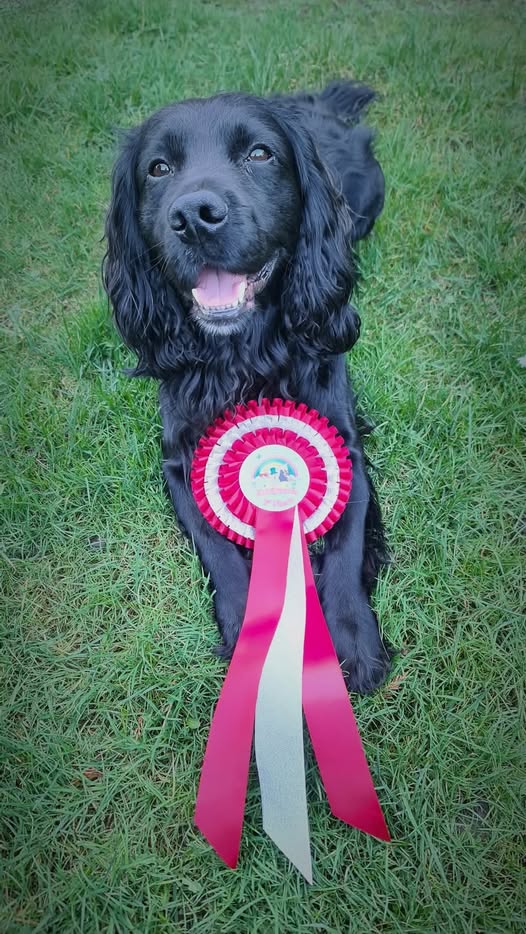
On top of that, he won the novice steeplechase class, which was brilliant to see him beat other dogs on time as it shows his confidence is growing.
But then, things got a little trickier.
Our afternoon runs clashed, making it a real challenge for me to keep my focus. Instead of being able to celebrate his win, I found myself feeling frazzled. The back-to-back runs created a rush that disrupted my usual routine, and I struggled to stay calm and focused.
In our next run, Quest was distracted. I had to rush and get him on the start line without our usual preparation, and he was clearly feeling it. His usual start-up routine, which helps him get into the zone, was interrupted, and this impacted his performance. When he was on the start line I knew he wasn’t fully focused. He would wait, but he kept looking back, showing me he wasn’t entirely present.
Once I released him, it was a jump then straight into the weaves, and I could see he wasn’t ready. He didn’t attempt the weaves and instead froze. I tried to get him moving again, and we managed a few little bits but eventually had to leave the ring, though I still rewarded him for trying and his end routine was still the same despite how ‘bad’ the run was.
After this, in our last run of the day, the novice steeplechase 2 round, Quest bounced back brilliantly. He completed the course wonderfully, but I made a mistake! I forgot the course and sent him to the wrong jump. Despite my error, Quest did everything I asked him to do perfectly. But instead of focusing on the fact that he performed well, I couldn’t stop beating myself up for the mistake. I felt like I had let him down, and I became frustrated with myself for forgetting the course.
Reflecting on all of this, I’ve realised that my brain, with its unique blend of ADHD and autism (AUDHD), played a significant role in how I processed everything that happened. I have only recently been diagnosed (in the last year) and although a lot of things now make sense, it can be incredibly difficult at times when your brain doesn’t always have your best interests at heart!
I want to share what might have been going on in my mind during the day, how it impacts me as an agility handler, and how it could potentially relate to you too—whether you’re neurodivergent or not.
How My AUDHD Affects My Agility Mindset
As a handler, my experience of agility is shaped by both my neurodivergent traits and the standard challenges anyone faces in the sport, like perfectionism and emotional regulation. Here’s what I think might have been happening in my mind during our show:
Cognitive Overload & Processing
Remembering multiple courses at once: Holding two different agility courses in my head was overwhelming. My brain struggled to process everything at once, which made it difficult to focus and manage the stress that came with performing in a competition. This kind of cognitive overload can create a sense of anxiety and make even the simplest tasks seem much harder.
Last-minute transitions: The rushed shift from one run to the next was really disruptive. Normally, I have a specific routine that helps me and Quest get focused, but the change in schedule threw everything off. This lack of predictability made it harder for me to stay calm, which in turn affected Quest’s behaviour.
Emotional Regulation & RSD (Rejection Sensitivity Dysphoria)
When I first heard about RDS it was like a lightbulb had gone off in my head and so much made sense!
Focusing on the negatives is an RSD, a trait I experience and can make even small mistakes feel monumental. When I forgot the course, it felt like a massive failure, and my mind fixated on the things that went wrong instead of celebrating the wins. This self-criticism is something that is really hard to shake off, even when I know it’s not helpful. I am sure if you compete in dog agility then you will have felt this at some point!
Feeling like I let Quest down: The emotional intensity of the day, combined with the desire to do right by Quest, made the lows feel even lower. I felt responsible for his struggles, especially when he froze or got distracted in the ring. The guilt I felt for not providing the ideal conditions for him to thrive made the frustration worse.
Struggling to celebrate success: ADHD often means that once a task is completed, my brain moves on to the next thing without taking time to acknowledge the success! This is a massive problem to me and I know I should celebrate our successes more, I mean I coach people to do this all the time, but it doesn’t mean it is easy to always do!
Even though Quest performed incredibly well in many parts of the day, I found it hard to truly appreciate his progress. Instead, I quickly shifted focus to what went wrong, which made it feel like I wasn’t fully celebrating the wins.
Perfectionism & Self-Pressure
Expecting a “perfect” performance: As a coach and trainer, I hold myself to very high standards. This perfectionist mindset means that even when Quest does well, I often find myself fixating on the smallest mistakes. I struggle to acknowledge how far we’ve come because the focus is always on how to improve, and I see flaws where there may not be any.
Trainer mindset: As someone who trains other handlers and dogs, I often put extra pressure on myself to set a “perfect” example. I felt like I had to demonstrate flawless performance, not just for my own benefit but to show my clients what can be achieved with hard work and dedication. When I don’t meet that standard, it’s hard not to feel disappointed in myself. I know this is not helpful, and a large part of how I train is showing people our flaws, but also showing people how we fix them – people learn far more from this! It doesn’t make it easy though, especially when there is so much going on!
Sensory & Environmental Factors
Increased stimulation: The noise, movement, and general chaos of a busy agility show can be overwhelming. With so many people, dogs, and distractions around, it can be difficult to focus. For someone with AUDHD, this heightened stimulation makes it even harder to think clearly and execute the plan I have in my mind. Through a lot of mindset work I have learnt strategies to help me (and many clients) to navigate the show environment, but I will be honest, it does take work.
Disrupted routine: Quest’s usual pre-run routine was interrupted, which added another layer of stress for both of us. He thrives on structure, and the break in routine impacted his ability to settle in. For dogs that are sensitive to their handler’s emotions, this disruption can affect their performance too.
Dopamine & Reward Processing
Not celebrating the win: For people with ADHD, dopamine plays a crucial role in our ability to feel motivated and satisfied. While winning should feel rewarding, I find that the ADHD brain doesn’t always register a sense of achievement unless there’s a tangible, immediate reward. I felt really down for most of the way home – until we got to my favourite place…
Blaze Farm where I treated myself to ice cream, and instantly, I felt better! The dopamine hit from this treat helped reset my mood. It’s a simple strategy that helps my brain shift focus, providing a moment of sensory pleasure and a break from the mental overload.
I have actually noticed just how much the dopamine hit (or lack of it) can impact a training session too! When I am training repetitive drills it is really hard for my brain to find any enjoyment in the agility at all! But by recognising this, I now make sure we inject any ‘boring but essential’ sessions with something fun that both me and Quest enjoy.
What You Can Take Away from This Experience
Whether you’re neurodivergent or neurotypical, you might find that some of these factors play a part in your own agility journey. Here are a few tips for dealing with similar challenges in your training:
Routine is key: Make sure you have a solid pre-run routine that helps you and your dog settle into the competition environment. This can help reduce stress and increase focus, especially when the environment feels overwhelming.
Practice mindfulness: Mindfulness exercises can help you stay grounded when things feel chaotic. Try taking a few deep breaths before each run and focus on the present moment to avoid getting lost in what might happen next.
Celebrate small wins: Try to take a moment to celebrate each victory, no matter how small. This will help your brain register that success and boost motivation for the next challenge.
Be kind to yourself: We all make mistakes, and perfection isn’t always possible. Practice self-compassion, and remember that your progress matters more than flawless execution. Your dog feeds off your energy, and if you’re calm and accepting of mistakes, they are more likely to stay focused.
Create rewards for yourself: Consider incorporating little rewards throughout the day, whether it’s a break, a treat, or something you enjoy. These small rewards can help manage your dopamine levels and keep you motivated.
Practice flexibility: Training and competition don’t always go according to plan. Practicing flexibility can help you manage unexpected situations with less stress.
I hope this gives you some insight into how my AUDHD impacts our training journey and provides some strategies to help you manage your own challenges—whether they stem from neurodivergence or other aspects of your mindset.
We’re all on this journey together, and the most important thing is to keep moving forward, one step at a time!
If you would like more FREE tips for you and your agility dog, and to be in a community of likeminded people, then click here to join my FREE FACEBOOK GROUP where we put all the pieces in place to help you and your dog succeed!
Till next time, Happy Training
Katrina x
 KB Dog Agility