
Please fill out the form below to be notified first for the next cohort. Places are limited and will be offered to those on the waitlist first.
Please fill out the form below to be notified first for the next cohort. Places are limited and will be offered to those on the waitlist first.

Does stepping onto the agility start line fill you with dread?
Do you worry your dog will shut down… again?
Or worse — do you go home from shows wondering if you’re even cut out for agility anymore?
You’re not alone.
And no, you don’t need to give up.
My dog Quest didn’t start out storming the agility ring.
In fact, he couldn’t even cope with being in it.
He’s a COVID pup. Nervous of people. Hyper-aware. Overwhelmed.
And unfortunately, I was anxious too — which meant we were feeding off each other’s stress.
There were runs where he froze completely.
There were runs where he rolled over and wouldn’t move!
There were runs where… he literally pooed in the ring. (Yep. We’ve all done that walk of shame)
I knew something had to change — and it wasn’t just our skills.
Last weekend, after using my A.N.X.I.O.U.S framework and building things slowly and intentionally, Quest competed in his very first full agility weekend.
Not just jumping. Not just steeplechase.
Full courses. Full contact equipment. Full trust in me.
And here’s what happened:
🏆 3 first places
🥉 2 third places
✅ A clear round
➡️ And a shock promotion to Grade 3
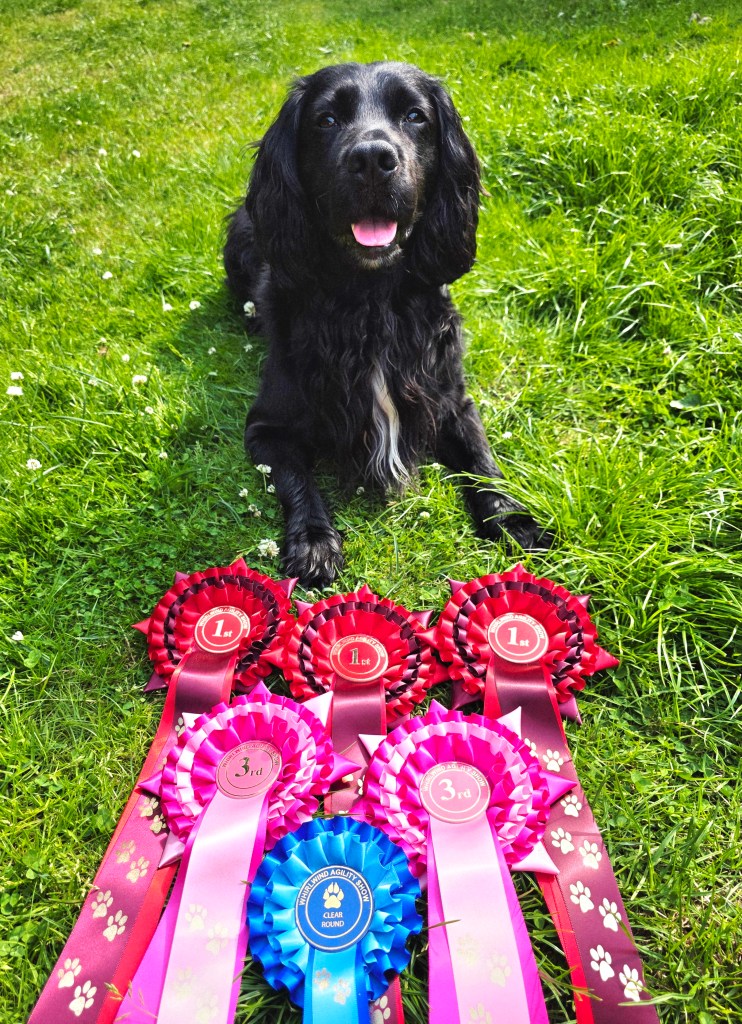
But it wasn’t about the ribbons.
It was about his face. His body language.
He looked happy, confident, and at ease in the ring!
That’s when I knew I had to share this process with more people.
Because too many teams are stuck at the start line, trying to “fix” the symptoms — when what they really need is a whole new framework.
If you’ve ever found yourself thinking…
…then this course is for you.
From Anxious to Amazing is a 6-week supportive, structured programme designed for agility handlers who are struggling with nerves, anxiety, or sensitive dogs.
It helps you rebuild from the inside out — using the exact same framework I used with Quest and many of my clients!
💥 Just £57 as part of a limited introductory offer – available for the first few sign ups. The price will increase soon, so grab your place now if you really want to make the change to start getting the success you deserve!
Because every show you enter without the right foundation chips away at your confidence just a little more.
Because no dog deserves to feel overwhelmed in the ring — and neither do you.
Because this summer could feel totally different — and all it takes is committing to the right support.
“I first saw Katrina training dogs many years ago and I have yet to meet someone who has advanced their understanding of dogs and dog training as quickly and deeply as Katrina has. Training tricks and skills is relatively easy, training a dog to perform in an environment that they have struggled with requires a very high level of knowledge and skill, not just in dog training but in dog psychology. The progress Katrina has made with her own dog, Quest, is phenomenal. A boy who was so affected by the environment, any environment, he could barely make eye contact with anyone . She learned what his complex needs were and she learned how to support his needs whilst also making progress in his agility skills. Katrina took time away from agility when it was best for Quest to focus on his life skills and came back when he was ready and able to make more progress. And now, after a couple of tough years Quest is making his mark in the agility arena. For that dog to be able to perform with confidence is fabulous but to perform as well as he is shows that combination of understanding dog psychology and dog training that is rare in the dog training market” – Nic Jones
Agility handlers with anxious dogs, anxious minds, or both. Whether you’re brand new to competing or stuck at the same grade for years, this course helps you build emotional readiness, confidence, and clarity for both ends of the lead.
Yes! You don’t need to be flying round Grade 6 to benefit. In fact, this course is ideal if you’re just starting out or struggling to move forward because of anxiety or overwhelm, but you do need to be heading towards the competition ring.
No problem! All calls are recorded and uploaded to your MemberVault area for you to watch at your own pace.
£57 — for now. Once the final few launch spots are taken, the price will increase. The sooner you join, the more you save.
You and your dog deserve to enjoy agility.
Not just to “cope” or survive a show.
You deserve confidence, connection, and runs that feel GOOD — even if they’re not perfect.
From Anxious to Amazing can help you get there.
And I’d love to guide you every step of the way.
Yesterday, we went to an Agility for All (A4A) show, and it was one of those days that truly brought out the highs and lows of training, competition, and the mindset behind it all.
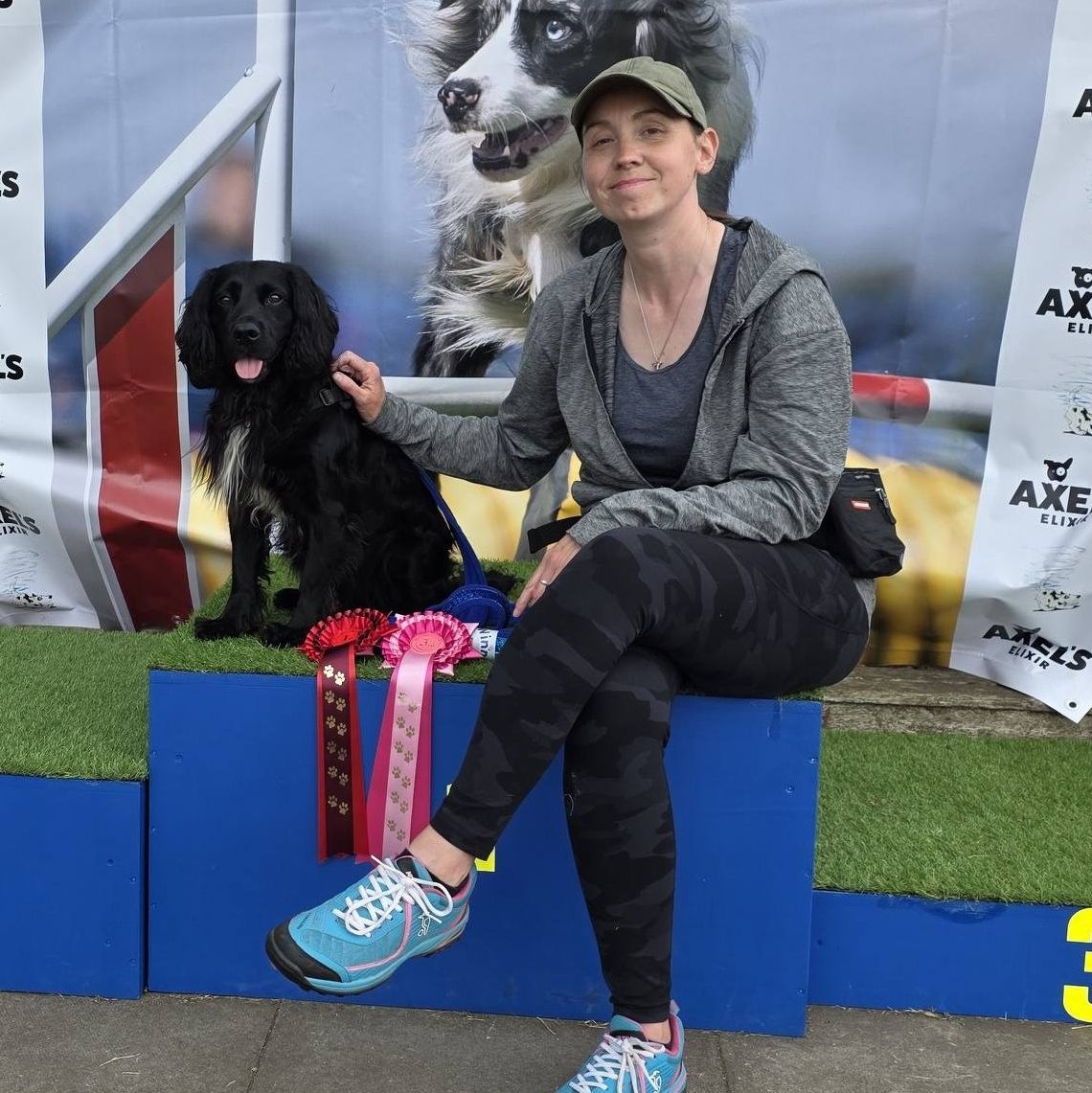
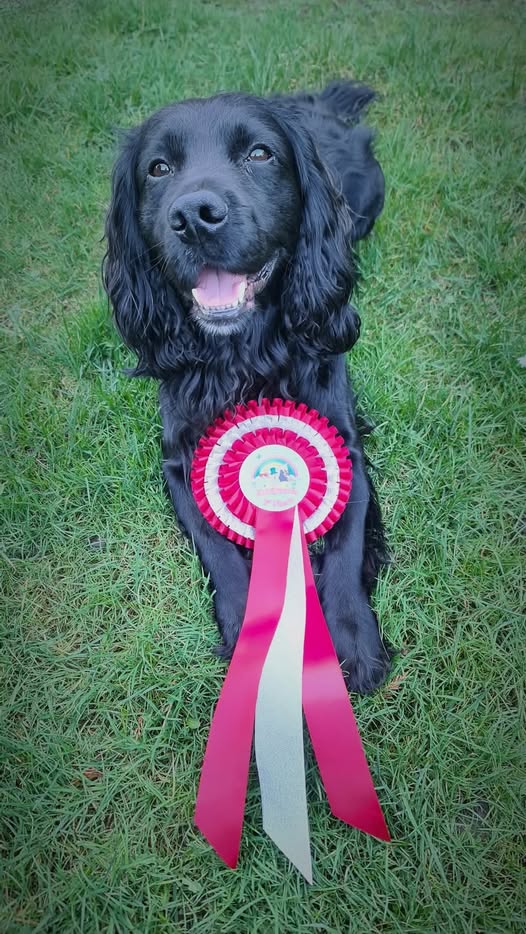
Quest, my young dog, had some massive wins. He played in the ring during his NFC agility run, which was a huge milestone for us. Over the past few years, we’ve worked hard on his toy play to enable me to do NFC runs with him, and seeing him engaged with the toy in the ring was a massive accomplishment. There was a time when, due to overwhelm, he wouldn’t even eat food, let alone play with a toy in the ring. The fact he did it so confidently yesterday was something to be proud of.
On top of that, he won the novice steeplechase class, which was brilliant to see him beat other dogs on time as it shows his confidence is growing.
But then, things got a little trickier.
Our afternoon runs clashed, making it a real challenge for me to keep my focus. Instead of being able to celebrate his win, I found myself feeling frazzled. The back-to-back runs created a rush that disrupted my usual routine, and I struggled to stay calm and focused.
In our next run, Quest was distracted. I had to rush and get him on the start line without our usual preparation, and he was clearly feeling it. His usual start-up routine, which helps him get into the zone, was interrupted, and this impacted his performance. When he was on the start line I knew he wasn’t fully focused. He would wait, but he kept looking back, showing me he wasn’t entirely present.
Once I released him, it was a jump then straight into the weaves, and I could see he wasn’t ready. He didn’t attempt the weaves and instead froze. I tried to get him moving again, and we managed a few little bits but eventually had to leave the ring, though I still rewarded him for trying and his end routine was still the same despite how ‘bad’ the run was.
After this, in our last run of the day, the novice steeplechase 2 round, Quest bounced back brilliantly. He completed the course wonderfully, but I made a mistake! I forgot the course and sent him to the wrong jump. Despite my error, Quest did everything I asked him to do perfectly. But instead of focusing on the fact that he performed well, I couldn’t stop beating myself up for the mistake. I felt like I had let him down, and I became frustrated with myself for forgetting the course.
Reflecting on all of this, I’ve realised that my brain, with its unique blend of ADHD and autism (AUDHD), played a significant role in how I processed everything that happened. I have only recently been diagnosed (in the last year) and although a lot of things now make sense, it can be incredibly difficult at times when your brain doesn’t always have your best interests at heart!
I want to share what might have been going on in my mind during the day, how it impacts me as an agility handler, and how it could potentially relate to you too—whether you’re neurodivergent or not.
As a handler, my experience of agility is shaped by both my neurodivergent traits and the standard challenges anyone faces in the sport, like perfectionism and emotional regulation. Here’s what I think might have been happening in my mind during our show:
Cognitive Overload & Processing
Remembering multiple courses at once: Holding two different agility courses in my head was overwhelming. My brain struggled to process everything at once, which made it difficult to focus and manage the stress that came with performing in a competition. This kind of cognitive overload can create a sense of anxiety and make even the simplest tasks seem much harder.
Last-minute transitions: The rushed shift from one run to the next was really disruptive. Normally, I have a specific routine that helps me and Quest get focused, but the change in schedule threw everything off. This lack of predictability made it harder for me to stay calm, which in turn affected Quest’s behaviour.
Emotional Regulation & RSD (Rejection Sensitivity Dysphoria)
When I first heard about RDS it was like a lightbulb had gone off in my head and so much made sense!
Focusing on the negatives is an RSD, a trait I experience and can make even small mistakes feel monumental. When I forgot the course, it felt like a massive failure, and my mind fixated on the things that went wrong instead of celebrating the wins. This self-criticism is something that is really hard to shake off, even when I know it’s not helpful. I am sure if you compete in dog agility then you will have felt this at some point!
Feeling like I let Quest down: The emotional intensity of the day, combined with the desire to do right by Quest, made the lows feel even lower. I felt responsible for his struggles, especially when he froze or got distracted in the ring. The guilt I felt for not providing the ideal conditions for him to thrive made the frustration worse.
Struggling to celebrate success: ADHD often means that once a task is completed, my brain moves on to the next thing without taking time to acknowledge the success! This is a massive problem to me and I know I should celebrate our successes more, I mean I coach people to do this all the time, but it doesn’t mean it is easy to always do!
Even though Quest performed incredibly well in many parts of the day, I found it hard to truly appreciate his progress. Instead, I quickly shifted focus to what went wrong, which made it feel like I wasn’t fully celebrating the wins.
Perfectionism & Self-Pressure
Expecting a “perfect” performance: As a coach and trainer, I hold myself to very high standards. This perfectionist mindset means that even when Quest does well, I often find myself fixating on the smallest mistakes. I struggle to acknowledge how far we’ve come because the focus is always on how to improve, and I see flaws where there may not be any.
Trainer mindset: As someone who trains other handlers and dogs, I often put extra pressure on myself to set a “perfect” example. I felt like I had to demonstrate flawless performance, not just for my own benefit but to show my clients what can be achieved with hard work and dedication. When I don’t meet that standard, it’s hard not to feel disappointed in myself. I know this is not helpful, and a large part of how I train is showing people our flaws, but also showing people how we fix them – people learn far more from this! It doesn’t make it easy though, especially when there is so much going on!
Sensory & Environmental Factors
Increased stimulation: The noise, movement, and general chaos of a busy agility show can be overwhelming. With so many people, dogs, and distractions around, it can be difficult to focus. For someone with AUDHD, this heightened stimulation makes it even harder to think clearly and execute the plan I have in my mind. Through a lot of mindset work I have learnt strategies to help me (and many clients) to navigate the show environment, but I will be honest, it does take work.
Disrupted routine: Quest’s usual pre-run routine was interrupted, which added another layer of stress for both of us. He thrives on structure, and the break in routine impacted his ability to settle in. For dogs that are sensitive to their handler’s emotions, this disruption can affect their performance too.
Dopamine & Reward Processing
Not celebrating the win: For people with ADHD, dopamine plays a crucial role in our ability to feel motivated and satisfied. While winning should feel rewarding, I find that the ADHD brain doesn’t always register a sense of achievement unless there’s a tangible, immediate reward. I felt really down for most of the way home – until we got to my favourite place…
Blaze Farm where I treated myself to ice cream, and instantly, I felt better! The dopamine hit from this treat helped reset my mood. It’s a simple strategy that helps my brain shift focus, providing a moment of sensory pleasure and a break from the mental overload.
I have actually noticed just how much the dopamine hit (or lack of it) can impact a training session too! When I am training repetitive drills it is really hard for my brain to find any enjoyment in the agility at all! But by recognising this, I now make sure we inject any ‘boring but essential’ sessions with something fun that both me and Quest enjoy.
Whether you’re neurodivergent or neurotypical, you might find that some of these factors play a part in your own agility journey. Here are a few tips for dealing with similar challenges in your training:
Routine is key: Make sure you have a solid pre-run routine that helps you and your dog settle into the competition environment. This can help reduce stress and increase focus, especially when the environment feels overwhelming.
Practice mindfulness: Mindfulness exercises can help you stay grounded when things feel chaotic. Try taking a few deep breaths before each run and focus on the present moment to avoid getting lost in what might happen next.
Celebrate small wins: Try to take a moment to celebrate each victory, no matter how small. This will help your brain register that success and boost motivation for the next challenge.
Be kind to yourself: We all make mistakes, and perfection isn’t always possible. Practice self-compassion, and remember that your progress matters more than flawless execution. Your dog feeds off your energy, and if you’re calm and accepting of mistakes, they are more likely to stay focused.
Create rewards for yourself: Consider incorporating little rewards throughout the day, whether it’s a break, a treat, or something you enjoy. These small rewards can help manage your dopamine levels and keep you motivated.
Practice flexibility: Training and competition don’t always go according to plan. Practicing flexibility can help you manage unexpected situations with less stress.
I hope this gives you some insight into how my AUDHD impacts our training journey and provides some strategies to help you manage your own challenges—whether they stem from neurodivergence or other aspects of your mindset.
We’re all on this journey together, and the most important thing is to keep moving forward, one step at a time!
If you would like more FREE tips for you and your agility dog, and to be in a community of likeminded people, then click here to join my FREE FACEBOOK GROUP where we put all the pieces in place to help you and your dog succeed!
Till next time, Happy Training
Katrina x
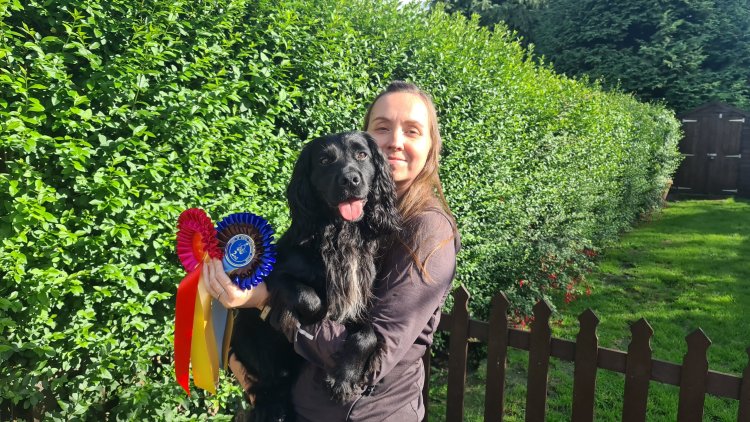
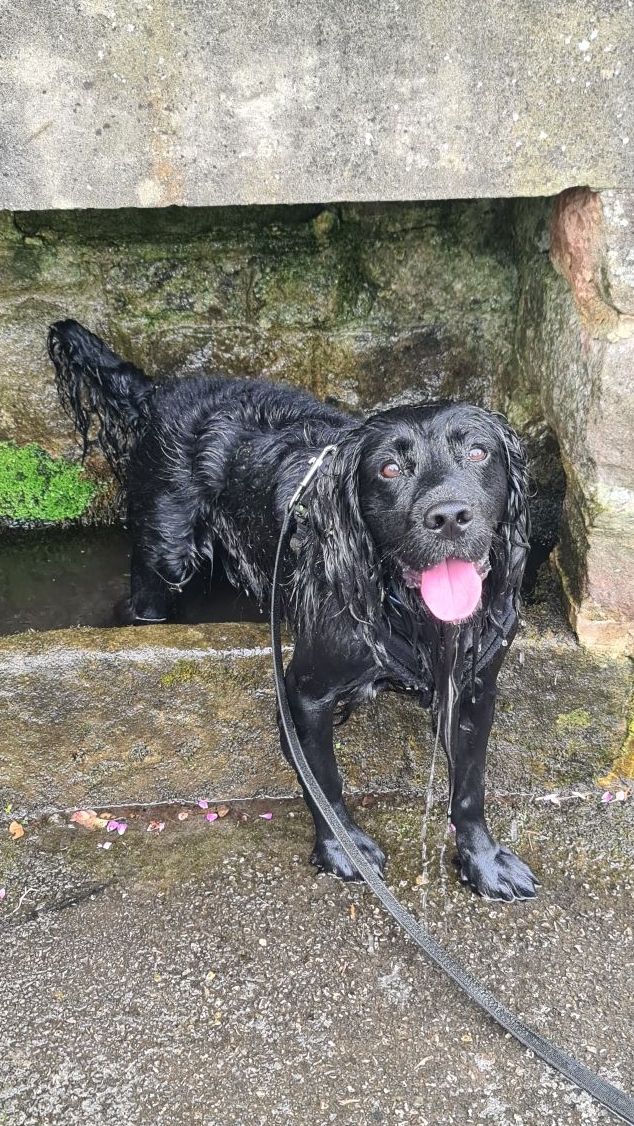
Today’s walk wasn’t easy!
Don’t get me wrong, there were some really lovely moments, and if you just saw the pictures on my socials without an explanation then you wouldn’t see the realities of navigating a walk with a dog who is more sensitive than most.
That is the trouble with social media, it only gives you a glimpse! People usually only put on their highlights creating an unrealistic perception of their actual life that can lead you down a spiral of self criticism, self doubt, and feeling like a failure when your life doesn’t match up to their glossy appearance.
I’m here to show you it all, warts an all!
Todays walk was a 3 mile loop, and on it, there were some challenging times!
We were not long into the walk, and Quest decided to plunge into the undergrowth, which is not usually a problem, but today, he got some sticky buds stuck on his back end and in between his toes. This was only apparent to me when he threw himself on his back and refused to move 🤦♀️.
Quest hates anything being stuck on his back end. It is an area he is really sensitive about since a traumatic event at the vets left him not wanting anyone to even touch it!
I’ve spent lots of time training cooperative care, and I’m now able to touch, groom, and remove things without him getting upset, but it has taken a lot of work. In the early days he could growl and mouth you if you went near his rear end, even without touching it he would just know what I was planning and his stress levels would rise.
Even after all the training and the fact I knew I could help him feel better by removing the buds, it wasn’t an ideal situation when he literally threw himself on his back at the start of the walk on a walk that I was wanting to do to to relax!
So that was the first tricky situation, removal of said sticky buds so we could carry on our walk. We then had to make sure he didn’t repeat this by doing the same again, not always easy when all the pavements are overgrown!
We then had a squirrel run straight across our path, literally inches from his nose! He then proceeded to try to follow the squirrel over the wall 🤦♀️.

When we got off the main road, I thought it would get easier as I wasn’t navigating the tiny pavements. It did in parts, but there were certainly other challenges along the route:
So as you can see, for an hours walk there was lots going on, both for me but more importantly for Quest!
Each example I have given you above is a situation where Quest had a certain amount of ‘stress’ he had to recover from, but this also filled his emotional ‘bucket’.
Quest isn’t a barky dog so not once on this walk did he react with noise, I only noticed how he was feeling because I know him better than anyone else, but also because I keep an eye on his body language and the subtle signs he shows me.
On the walk I was utilising these ‘opportunities’ to do some training to change what could be a negative experience to have a positive association, and to work on disengagement. I always like to view these scenarios as learning opportunities rather than letting them stress me out, otherwise the walk would be no good for either of us!
Dogs can smell our emotions and will often change their behaviour if they sense we are acting a certain way, so learning to manage your own emotions and expectations is crucial especially when you have an anxious dog!
Managing your own emotions, understanding your dog’s stress bucket and knowing what to do in these situations isn’t easy, but don’t fear, this is exactly why I created The Anxious Agility Queen because I want to help more owners like you!
There are actually 5 ways you can get your hands on FREE information TODAY that will help both you and your anxious dog:
I know how stressful life with a sensitive or anxious dog can be. It isn’t always a ‘walk in the park’ and life can look very different to what we imagined it to be when we first brought our dog home.
I also realise that many people are unaware just how difficult things are when you walk an anxious dog, so please help me to spread the word by sharing this blog on your socials or to people who you think will benefit from this information and free guidance.
Understanding our dogs and how they are feeling on a day to day basis is the one thing you can do to help your anxious or sensitive dog. Understanding that it isn’t their fault, being compassionate instead of frustrated but also giving yourself some time to destress from the experiences that having an anxious dog can bring.
Keep smiling, keep going, and keep being an advocate for your anxious dog. Their opinion of you is the only opinion that matters!
Till next time,
Katrina and Quest x
If you have followed me for a while, you know my branding is all about all these little pieces that go into the bigger game of agility.
From working my way up from Ground Zero To Grade 7 with my dogs (nice little podcast plug there 😉) and studying countess courses in dog behaviour, all manner of dog training skills, human psychology, along with the obvious agility skills, I have developed my unique coaching system that allows me to combine dog behaviour knowledge with everything agility.
I know what it’s like to be a beginner and do everything wrong, to be so anxious that you can’t seem to get anything right, to have a fantastic dog at training but one that can’t cope in competitions.
I have experienced the super highs of winning up the grades coupled with the enormous lows that come with competitive sport and dealing with people who don’t always hold the same values as yourself!
It is all these little pieces that have not only given me the success I’ve had with my own dogs, they have given me the skills to develop the business I have today along with helping several local and UK dog bunisses from start up to where they are now! One of those external businesses wouldn’t even exist if it wasn’t for my guidance and coming up with the initial idea, quickly forgotten seems!🤷♀️
I base everything I do on each unique agility team. On what their dog behaviour is telling me, combined with the goals the handler is wanting to achieve.
Everyone thinks of agility and thinks of the skills, the equipment, the handling moves, etc, but what often falls to the sidelines are the most important bits – the emotions, individualities, quirks and energy levels of both you and your dog!
The agility skills are obviously important, but without the other pieces, the skills alone won’t get you success.
It doesn’t matter what level you are at, beginner or competition grade. The pieces don’t just apply to your dog, they involve you too! Our dogs feed off our emotions, our energy, our body language, and as humans, we don’t get it right all of the time! It is knowing which pieces each team needs at that exact moment to help them to succeed. Get it wrong, and it is the difference between a good training session or competition run and a rubbish one – where you are left feeling deflated, overwelmed, and like you want to give everything up!
What pieces do you need for your dog?
Well, I’d like to give you them all here right now, but it’s not that simple I’m afraid!
You and your dog are like no other team out there, you can’t be! You are individual, and so is your dog! Your training, your experiences, your habits both good and bad, they are all individual to you.
Remember, comparison is the thief of joy! It is easy to want what your friend has.
Jealousy is a human trait that is an unfortunate common in competitive sport. Use it wisely, and it will supercharge your success. Use it negatively, and you will always be stuck where you are.
If you are wanting to know the exact pieces that will go into creating success for your agility team, that is exactly what I do in my Quest For Success Dog Agility Academy

In there, I help both team members (you and your dog) to reach their full potential and to get consistent success. Along with this, you can follow my journey with Quest. We have successfully started his competion career, and in the academy, I tell you exactly how we’ve done this despite Quest being nervous of people and him not having trained in a group environment before entering the ring!

I’m also bringing out my second book really soon, which dives in to all the little pieces in more depth. It has been a few years in the making but I wanted to get it just right.
Make sure you subscribe to my blogs/ email list to know as soon as that is released.

If you are new to my blogs and are wondering exactly what turmoils and troubles I’ve been through emotionally and agility wise, you can find my story in my first book, Milo The Dog That Gave Me It All. I will warn you though, you may need your tissues 😢.
It’s nice to now see other trainers taking on the jigsaw analogy, I’m actually quite flattered. I mean, it’s a shame they can’t come up with their own ideas, and I will be keeping an eye on it for copyright reasons, but it is an awesome concept after all 😊. It creates more awareness about the importance of all the little pieces in agility and infact helps my brand and my message to be heard. Just remember where you saw it first 😉🧩.
Head over to my website if you would like any help in putting the pieces in place for your team🧩.
Happy Training
Katrina 🐾
Can we just normalise people recalling their dog back to them when they see another dog!
I live in a small (well expanding) village, and it is shocking how many incidents I have witnessed where owners just seem completely oblivious to their own dogs’ capabilities!
A few weeks ago my husband was walking Flash along a quiet lane, my husband is really vigilant when walking our dogs but he had stopped to pick up Flash’s poo then all of a sudden out of nowhere this large tri coloured dog was up in Flash’s face picking a serious fight! My husband had to intervene and thankfully scared the attacking dog away with minimal physical damage to Flash. It turned out that this dog is owned by a frail old man who never walks this dog on a lead (he lives close to where this happened and was heading out on a walk, so the dog ran out ahead) This man heard the commotion, he was nowhere near when it happened, he never apologised, and just carried on his walk!
This incident has rightly made Flash quite weary of unknown dogs running up to him, so as a responsible owner, I avoid this happening.
Today, I walked Flash at the top of the village in some big open fields where you can see for miles around. I noticed a man walking a golden retriever in the distance, happily letting his dog run up and interact with any dog it came across 🤷♀️.
Obviously, this man was going the same way as us, so I walked right up to the top of the field, well out of the way so Flash and I could carry on enjoying our walk in peace. The look of confusion and almost discust on this man’s face was plain to see. How dare I not let my dog interact with his?!
On the same walk this morning, I also witnessed a couple walking a large wirehaired visla type in the fields opposite. Now the trouble was, the dog was a whole field in front of the owners!! He was running up to a Jack Russell. The owners weren’t even in the same field! I have previous experience of this particular dog as it has run up to my dogs before and the woman owner said the usual ‘oh he’s never done that before, he’s friendly’ He clearly hasn’t got any better at his recall skills in the past year!
Now, just in my village, that is 3 incidents that could have had very different outcomes, and from what I could see, each owner was completely oblivious as to what damage either their dog could cause or could receive!
At Chatsworth last week, again, an off lead dog ran up to Flash – we’d seen the dog in the distance and put Flash on a lead. When the dog got to us, there was some growling, and I quickly got Flash out of that situation.
Now Flash is a dog I can control 100% off lead, his recall is spot on, he walks close to me when he sees another dog etc, I can 100% say I have control of him both on and off lead. However, I can’t guarantee what dogs he will like and which he won’t.
I’ve never had a problem with Flash and other dogs, and I don’t have one now. However, I do know that the incident where he got attacked really worried him. He has shown me all the signs of not wanting unknown dogs running up to him because he is scared he will get attacked again. So, I don’t put him in that situation. I’m working on building his confidence back up at his pace.
I still don’t understand in this day and age, when there is so much on social media about dog attacks, yellow dog schemes, putting your dog back on lead when you see another dog, that we are still on the whole, oblivious to the emotional and physical damage it can do just by allowing your dog to ‘say hello’ .
Now I’m obviously not talking about not socialising your dog or your dog not having friends, I am purely talking about the unknown ones you meet when walking.
It’s actually really weird to expect your dog to want to say hello to every dog! I certainly don’t want to speak to everyone, and I’m sure you don’t, too!
There are many reasons a dog doesn’t want to interact, here are just a few:
All you need to do as an owner is recall your dog and pop it back on a lead. If it is obvious the other dog needs space, please give it some and don’t make the owners life harder by making comments etc!
If people are happy for the dogs to interact, they will let you know, or if you are unsure, ask BEFORE, letting them anywhere near.
I do think there needs to be more work done on owners reading dogs’ body language. It should be a compulsory part of every dog training class! I know I cover it at length in my courses, but I’m surprised at how many trainers don’t include it.

So next time you are walking your dog and another dog walker is making it really obvious they don’t want your dog to interact, please just respect that! If not, you might just end up with blood on your hands and a large vet bill or worse! Nobody wants that!!
Feel free to share this blog to spread the word and to keep all our doggies safe!
Till next time, happy training,
Katrina 🐾

Over the last few months, the dog training world has been quite awful. Organisations and business’ not being what they seem. Trainers ripping each other to bits, questioning their actions, motives, and ethics. People seemingly wanting to comment on everything and anything that causes conflict.
Couple this with the agility world arguing about everything! The great divide between the elite and the normal handlers, equipment and show qualms, rule grievences, people only supporting those in their clique, it seems never-ending.
I’ve questioned even if I want to stay in this industry, but why should I leave something I’m passionate about because of how the actions of others have made me feel?
That brings me onto the reason for writing this blog.
See, I’m a massive advocate for mental health. If you have read my book ‘Milo The Dog That Gave Me It All’ you will realise why that is.
I got into agility as something to do with Milo that would get me out of the house and able to make new friends and help my anxiety. Little did I know just how catty this world could be and how lonely it can make you feel! Over the years, it has definitely made my anxiety worse in a lot of ways, but I’m actually thankful. It has enabled me to grow as a person and develop skills I didn’t know I had in me in order to get through some difficult times! These skills I can now pass on to my students as I explain the importance of how our own emotions affect our dogs’ performance.
If I knew then what I know now I certainly wouldn’t have set up the business, but when I think of this I have to remember the thousands of dogs I’ve helped over the years and ultimately that is what I do it for, the dogs, to help them be more understood in this world we have brought them into. If more people could see the world through the eyes of their dogs, they would probably be quite surprised at how different things are for them compared to how we think they are feeling.
I see so many trainers set up now, all offering all manner of things to do with agility and dog training. Some of these ‘trainers’ have no qualifications, very few qualifications, or lie about the ones they have! It is definitely disheartening when you’ve spent years and thousands of pounds building up your own knowledge. The sad truth is that the majority of paying clients don’t care if the trainer is qualified or not. They don’t ask or presume that because they have set up, then they are qualified. There isn’t actually any legislation that stops trainers with no qualifications setting up, which is shocking really, so legally, they aren’t doing anything wrong, just morally.
Anyway I digress, back to the main point of this blog, which is to ask you to really think about your actions and words and how they might affect others around you even if they are not directly related to the subject.
There was so much talk of the ‘be kind’ movement after Caroline Flack passed away, and I feel it has all been long forgotten but it is still as important and prehaps even more relevant in these difficult financial times we are all facing currently.

This week people have been moaning on social media about people posting anonymously, yet seem to have overlooked the reason for being anonymous is most probably the fact they don’t feel comfortable expressing their views as themselves for fear of conflict, ridicule or worse!
I get that agility is a competitive sport, and with that you will get opinions, jealousy, cliques, and people going after the elite like they hold some golden torch, but please think of your words, actions, and the affect on those around you when you go about your everyday lives, training groups, and agility competitions. Really think before you hide behind a keyboard and type on social media, talk around rings or at training groups.
This industry has previously led me to a very dark place, so I’m talking about all this from experience, I KNOW how the words and actions of others can make you feel.
I’ve been really disappointed over the last few days, weeks, and months of how people in the agility and dog training world have behaved. We are meant to be compassionate people who care, but maybe that care doesn’t extend beyond dogs?!
Yes, we all have opinions, but what makes one opinion more valid than another? Is it how many friends that person has? Who they are in terms of importance? Does it go on experience or qualifications???
Your opinions are based on you, your experiences, your thoughts, beliefs, and values, you will have a bias! These views may be totally different to someone else. They are both important, but who’s are more valid?!? If you feel strongly about something, there are ways to channel your opinion, ways to be heard other than social media.
Obviously this blog is just my opinion, you may not agree with any of it, but if it has opened your eyes to thinking before you speak, type, or post then it has done it’s job.
In a world where we are meant to be being kind, I think quite a few people could do with being a bit kinder!
Till next time, happy training.
Katrina
So I am actually a bit ashamed to say that before yesterday we had never been to an independent agility show!
So for those that don’t understand what I mean, in the UK there are two main organisations that run agility shows. The Kennel Club (KC) is the one most people know about along with Agility 4 All, which was formerly known as UKA. As well as these two organisations there are lots of other independent shows ran by different businesses. Any results you get from the independent shows will not count towards any progression at KC or A4A shows, but the independent show may have it’s own league for results (not all do this though).
The main reason for going to this show was to have a look around and see what it was like for my young dog Quest. Quest is about to start his competition journey and I am looking for as many ways as I can to make his transition from training to competition as positive as possible.
I have had a lot of comments from people wondering when Quest is actually going to enter the ring. My answer is always the same – when we are ready to do so! I felt my competition journey was rushed a bit with my other dogs to the point where it wasn’t planned, but because they progressed quickly, combined with the covid break in shows, we are now in a position of ‘what next’. If you have read my book you will know the story of why I felt so pressured, but with many points now proven I certainly don’t want to repeat this with Quest!
I had heard that this particular show was good for giving young dogs that stepping stone into competitions. You can run ‘not for competition’ allowing you to train in the ring. Also in the lower grades (grades 1 and 2) you can carry a toy, as long as the toy doesn’t touch the dog when running for competition. This sounded like a good set up so we went along to see.

I didn’t enter Quest for any competition runs, we were there to train around the rings and have a look to see if the environment will suit him in the future. I did enter my other two dogs Milo and Flash. I’ve made no secret of not really knowing what to do next with Milo and Flash after they reached their G7 goal, but as we were wanting to have a look at the show we took them along.
They both had a fun time competing at the show and I really enjoyed running them. They don’t get as much training as they used to but they certainly do still enjoy having a competition run from time to time. Milo was a little bit too excited in his 2nd run that resulted in a  in the ring
  . He did have 2 before he went in, so I wasn’t really expecting that, but as always he likes to keep me on my toes
  .
.
These things happen to even a grade 7 dog it seems and in a strange way I am glad it did. One of my worries when Quest starts to compete is him doing this. Quest can do an adrenaline poo from time to time – it is something we are working hard on, and we have just about conquered it in most agility environments, but the fact this happened to Milo has weirdly put my mind at ease for when Quest does enter the ring. Don’t get me wrong, I will certainly be doing everything I can to prevent it, but as a one off these things happen!
I could have easily have skipped mentioning all that from my write up, but one thing I find really odd in agility is how people mention only the ‘best bits’. You will see edited videos on social media or what seems like the perfect run or training session. As a trainer I believe it is my job to be honest and show you the good and the bad, and what to do when these things happen. You don’t learn from only seeing someones best bits!
That is a big reason I started my Quest For Success Academy, to give handlers an honest guide of taking a young dog to the competition ring and beyond. By sharing my experiences combined with my behaviour knowledge, it puts handlers in a much better place to understand their dog and to build a successful team. Agility is far more than just skills alone. Skills will only get you so far, but understanding your dog combined with these skills that is what gets you the success!
Milo’s results from yesterday were – 1 x E in his 1st run – he popped out his weaves then I chose to carry on without correcting these to keep his confidence high. 1 x E in the jumping for his poo incident. 1st (clear) in the other agility and then 5F for dropping a pole in the steeplechase (would have been 2nd if he didn’t drop the pole) For a dog that will be 9 this year I think he is doing great!
Flash had 2 runs, jumping I got him and E as I pulled off a jump too soon, then his Steeplechase was a clear 2nd.
I really enjoyed running them today and they enjoyed it too, so we will carry on with the odd show here and there for now. I actually think the independent show suited them for where they are both at in their journey so we will definitely be taking them to more of them.

The show in general was very laid back with plenty of space. The rings were fenced but if I am honest I wouldn’t say securely fenced, however it is my own personal opinion that you shouldn’t rely on a fenced ring anyway. Yes it gives the handler a sense of security, but there are other pieces of the agility puzzle that need to be worked on too alongside the agility skills to allow you to feel confident to run your dog with or without a fenced ring.
In reflection we would definitely go to this show again, the set up suited each of my dogs for different reasons. I like that they have put things in place to help young dogs transition to the competition environment. We have another independent show to try in a month or so, so it will be good to compare the two.
These shows rely on handlers giving them the support to continue, so I’d say if you have one near you, go along and give it a try. A bonus was all runs were in the dry! Not a spot of rain till we left!
Happy training / competing
Katrina


Right let’s get one thing clear, hitting your agility dog (or any dog for that matter) is not and never will be okay! Neither is yanking them by their lead or collar so much that they have to walk on two legs!!
I have just come back from an agility show where I witnessed at least four separate incidents of handlers purposefully hitting their dogs!
I am going to talk about two specific ones in this blog to hopefully enlighten the behaviour side of what these dogs were going through.
The first incident a handler was sat very close to a ring with their friends, all having a lovely time chatting away. This particular handler had 2 dogs with them, one had a yellow lead or bandana (so was obviously nervous or fearful – Check out the yellow dog scheme here for more information) I watched these dogs for about 30 minutes, maybe more as I was standing ringside waiting to walk a course. In the short time I was watching I noticed their dogs react to three black dogs that were approaching them, these were on separate occasions (so one dog was being walked past at a time, with some time elapsed in between). After the second reaction, I quickly picked up that it was black dogs that these two dogs weren’t keen on, as other dogs had walked past with no problem.
The handler had sat themselves really close to the queue for that ring, so every dog that was going to join the agility queue had to walk past them. These dogs were sat with the handler and the group of friends with nowhere to go, with approaching dogs walking straight towards them. On all occasions when the dogs reacted the dog walking past didn’t do anything obvious to upset them, there was no lunging or barking etc, the dog each time was just walking with their handler to join the queue.
On the first occasion the handler of the two dogs shouted at their dog when the dogs both started to react. On the second occasion they shouted even more, but this time also started to manhandle the dogs telling them to sit and proceeded to push their rear ends to the floor.
The third time, after the two dogs pulled the handler backwards, so they were lying looking to to the sky, the handler sat up, took off their cap, and really shouted at their dogs, hitting them repeatedly on the head with their cap, saying how they had had enough. Those poor dogs!!!
So what was going on?!
Obviously I only observed a few moments in time but…
These dogs had been sat ringside for a while, they were collies, so the chances of them spending that time eye stalking are pretty high. An agility show is full of adrenaline and high arousal, so already these dogs would have quite a full bucket (stress levels will be high)
They both reacted to black dogs only, this could be because….
Maybe they have had a bad experience with a black dog previously and this had been held in their memory, or it could be because black dogs are hard to read, their face doesn’t show the usual expressions, so this makes them really hard to read by other dogs. Also due to where the handler was sat, the other dogs were approaching them head on, this is actually really confrontational from a dogs’ perspective.
These two dogs were obviously fearful and stressed and how did the handler respond? By hitting them!! Handlers are meant to be a source of trust, care, love – hitting them isn’t this!!
So they were struggling and they get hit – nice one!!
The next instance I am going to mention is a young collie pup lunging and barking at the other dogs. To be fair to this handler, they were a good distance away from the rings, but not far enough away as the dog was still struggling. After about five minutes this handler had had enough, so the way they dealt with it was to yank and crank the lead, and smack the dog at the same time! A puppy!!!
THIS IS NOT ACCEPTABLE!!
Now I don’t know what made these two handlers act like this, I’m guessing frustration or stress, but why with all the talk of reward based training etc does this happen?! Like I mentioned earlier these weren’t isolated incidents either! All the handlers I witnessed doing this also had a toy or treats on them, and I bet if I was to ask them how they trained their dog, they would say with rewards!
I am not sure if it is a lack of education, the fact that people don’t question this behaviour, or what it is, but please don’t ever hit, yank or crank your dog! It will ruin the trust they have in you, and harm your relationship. Agility is a team sport, how can you be a team when you are physically or verbally abusive to your dog?!
You want your dog to be happy, confident and able to trust you when they are at a show (and when they are not).
If your dog is reacting they aren’t having a good time!! They are finding the situation difficult!
They are not giving you a hard time, they are having a hard time!!!!
The other thing I witnessed was lots of handlers who were running spaniels seemed to get frustrated with them when they went off sniffing and didn’t do the course. Some of these handlers chose to grab their dog by the collar so high that they were on two legs bouncing instead of walking back to where ever it was they got distracted.
Don’t do this!!
If your dog is sniffing try to work out why. If you know the reason, you can then put the training in place to help them. I have three spaniels, so I know about sniffing believe me! Two of them are grade seven dogs, and I too had to work through all of these issues.
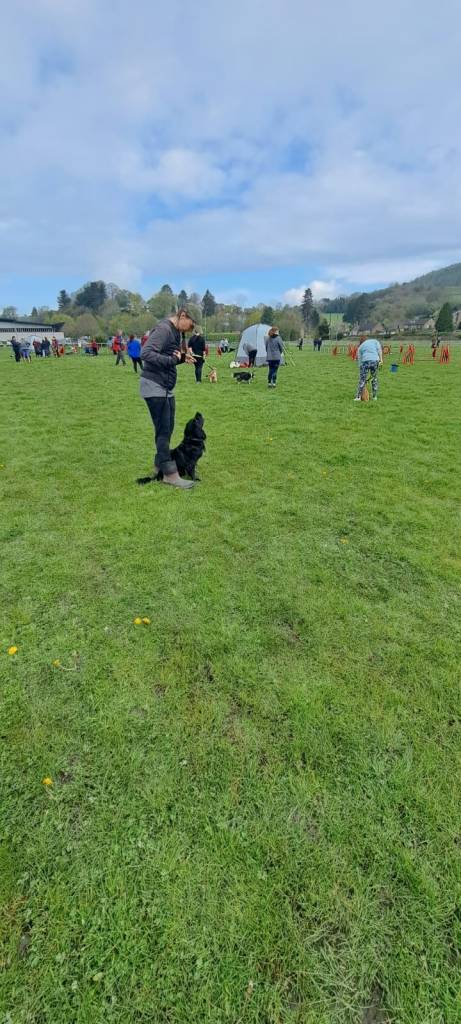

We were at the show as part of Quest’s training. It is really important we have lots of skills in place before we ask our dogs to run in a competition. It isn’t fair to put them in situations that they are not ready for and expect them to perform.
You are at the competition for YOU! You chose to enter! Your dog doesn’t even know ribbons and trophies exist! To get the results YOU want, you need to understand your dog completely. That includes their individual needs and emotions.
If you are interested in how I take a young dog to the ring to make sure ALL the pieces in the right place, you would be more than welcome to join us in my Quest For Success Academy. The first intake is launching soon and it will be packed full of information on how to put all the pieces in place for your success.
If you would like more information on my academy please click here.
Please don’t hit your dog EVER, it just isn’t ok.
Happy training only!
Katrina

If you follow any of my social media, you will know that I am launching a new membership soon. I thought I’d write a blog detailing my decision to document our journey.
You may be wondering why I am doing this. Will anyone really be interested in what Quest and I are up to?
The answer to that is, who knows 😆….
When you get to a certain age, you start to look at life differently. All the things, thoughts, and reasons ‘why’ you do things start to have a deeper meaning.
For me, my new membership is a way for me to connect with those who share my passion for training agility from the dogs point of view. It is a way for me to connect with those who truly value what I have to say.
You see, the thing is, I’ve given a lot of free advice away over the years. Some of that advice has been appreciated, and some of it not!
There is nothing more demoralising than trying to help when the advice you give is just ignored.
I have no problem with giving a certain amount of advice out for free, I enjoy helping those who look at their dogs the way I look at mine. That is why I write blogs and record a podcast each week, but at the end of the day my business doesn’t run like a soup kitchen unfortunately, it has to be viable and sadly giving out advice for free doesn’t make it a viable business.
The thing is, with free advice, it mostly isn’t valued. Why would it be valued if it was free??!
I have ran countless Facebook groups, posted post after post where the engagement is shocking. The training posts take time to plan and write, but unfortunately, because of how Facebook works, the algorithm relies on people to interact with the posts to make small businesses seen. However, I am also well aware that a high percentage are just in the groups for the free advice or to lurk about to see what is going on.
I have had a long think about my business and how running it affects my life, and that is why I’ve decided to make a few changes.
When I’m working, it is time away from my dogs, and if you’ve read my book “Milo the dog that gave me it all” you will know why I got my dogs in the first place. By me committing loads of time to the business, they don’t get to spend that time with me.
Along with this, I want to help those who truly value what I have to say. I have studied countless courses, paid thousands and thousands for my education, I train with top agility trainers, and I make sure all my behaviour knowledge is current and up to date. I have spent years studying human psychology, and this, too, adds value to the advice I give out.
I am also aware of just how many agility trainers there are out there, and that is why I’ve made these changes.
My business isn’t about trying to be the next trainer to teach just skills. There are loads of those already! My business wants you to understand each piece of your dog when it comes to playing agility.
Not everyone wants that, that’s fine. For me, I’ve had to way up the values I hold personally and these values put their stamp all over what I do.
This is why my services have changed. I only train a handful of in person sessions now to allow me to spend more time with my dogs. More of my work is going online for this reason, but also so I can reach a wider circle of handlers who want to connect and understand their agility dogs completely.
It enables me to focus on the behaviour side a lot more.
So if you have got this far reading this, you will be wondering why a membership 🤔
The main reason is to share our journey, our experience, and my knowledge with those who want to come along with us. Social media is full of people’s best bits. It is all edited. With my membership, you will see it all! The good bits, the bad, and how I train the bad to make them good again!
We obviously won’t just be focused on Quest’s agility. We will look at all pieces that go into his training and competing. We will be looking at me, the handler, and looking at what I do and how the choices I make affect him. It is also highly likely that I will be mentioning Milo and Flash and looking at whatever other behaviour or training advice I can give members along the way.
A membership ensures I am connecting with those who value my advice rather than those who are there just for the freebies (it is a business, after all 😉)
If you’d like to come with us on our journey, you’d be most welcome. The waiting room is now open to those who want to put all their pieces in place for success!
Happy Training
Katrina and Quest 🐾


 KB Dog Agility