When the Results Don’t Tell the Full Story…
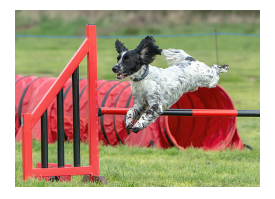
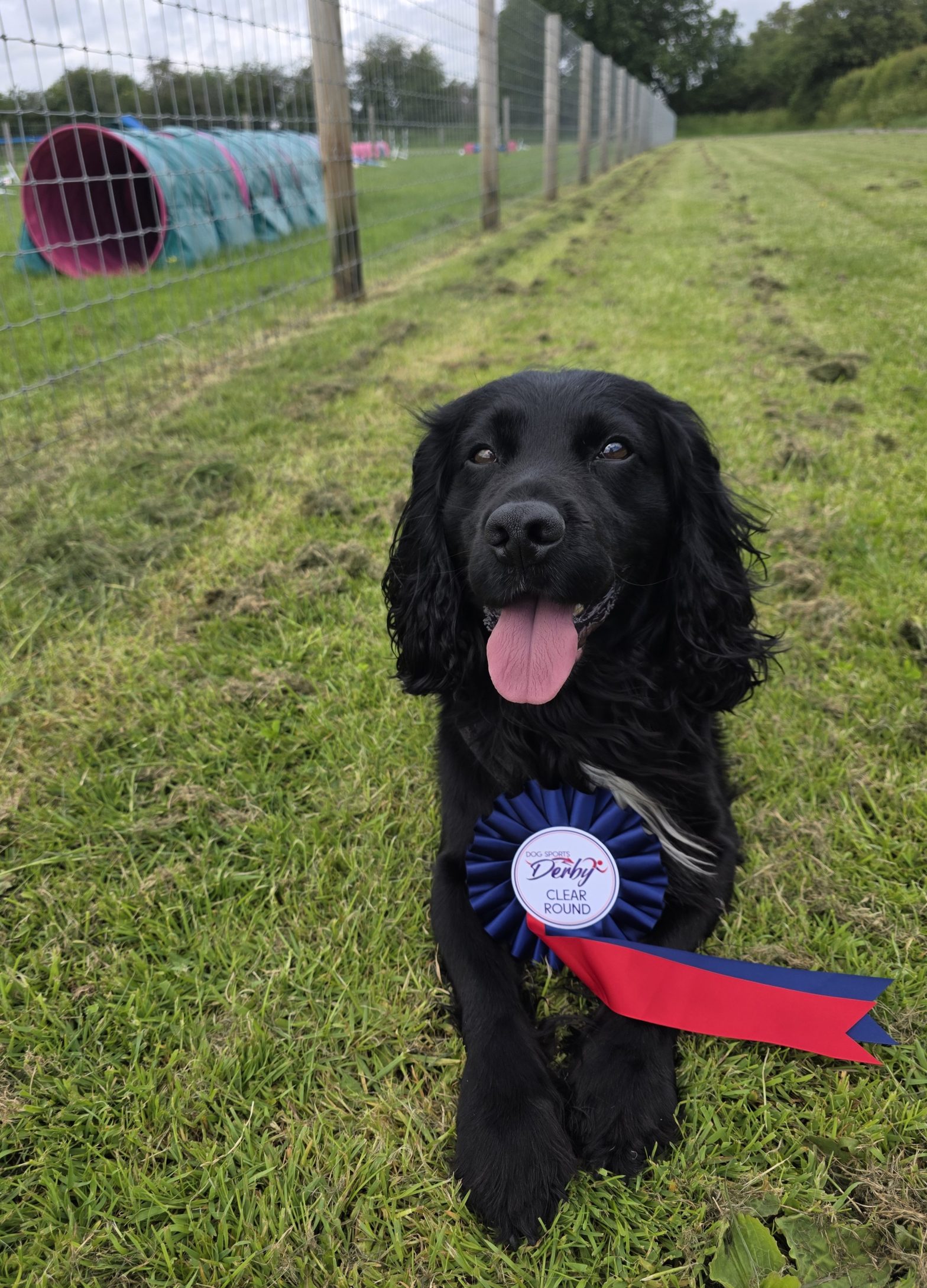
Yesterday, Quest and I competed at an agility show.
On paper, the results weren’t particularly impressive: two eliminations and a clear round that was around ten seconds slower than the winning time.
If you were looking at the results from home, you might assume we’d had an off day.
But that’s not what happened.
In our clear round, Quest ran past the weave entry. I called him back and, for a few seconds, he simply stood and looked at me.
Not because he was distracted. Not because he had forgotten his training. Not because he was suddenly slow.
He stopped because he knew something hadn’t gone to plan.
Then he came back, re-engaged beautifully, and finished the course with enthusiasm and speed. Those few seconds accounted for most of the time difference.
The run itself felt great.
Yet when I got home, I found myself writing a Facebook post explaining exactly what had happened.
And then I stopped and deleted it.
Because I realised something.
The post wasn’t really about the run.
It was about safety.
The Need to Manage Perception
For years, whenever a run didn’t go to plan, I felt an urge to explain.
To provide context.
To make sure people understood.
To tell them what really happened.
At first glance, that sounds reasonable.
But when I sat with it, I realised I wasn’t sharing because I wanted to. I was sharing because I wanted to feel safer.
I wanted to control how people interpreted the result. I wanted to protect myself from assumptions. I wanted people to know I wasn’t failing.
The pattern looked something like this:
Event.
Explanation.
Relief.
And I suspect I’m not alone.
What Are We Protecting Ourselves From?
The interesting question isn’t why I deleted the post.
The interesting question is why I felt the need to write it in the first place.
What was I protecting myself from?
What would happen if people saw the result and drew their own conclusions?
Why did that feel uncomfortable?
Those questions led me towards something I’ve been observing in agility for a long time.
Not the sport itself.
The culture around it.
A Culture That Rewards Performance
I love agility.
I genuinely believe it can transform relationships between dogs and humans.
When done thoughtfully, agility can improve communication, confidence, teamwork and trust. The results become a by-product of the relationship.
That has always been my philosophy.
But agility is also a competitive sport.
Results are visible.
Placings are visible.
Mistakes are visible.
Success is visible.
People naturally compare.
People naturally notice who wins.
People naturally notice who doesn’t.
For some people, that’s motivating.
For others, particularly many neurodivergent people, it can create a very different experience.
One of the things I keep coming back to is this:
Agility is often described as a fantastic community.
And for many people, it is.
But can something be a wonderful community for some people while simultaneously leaving others feeling like they don’t belong?
I think that’s a question worth asking.
Success, Safety and Psychological Pressure
One thing I see repeatedly is people feeling pressure to present success and hide struggle.
Not because anyone has explicitly told them to.
But because success tends to be what gets noticed, celebrated and shared.
The result is that many people start managing perceptions instead of processing experiences.
And when that happens, psychological safety starts to disappear.
Psychological safety doesn’t mean everyone gets a rosette.
It doesn’t mean we stop competing.
It means feeling able to make mistakes without feeling like your value as a handler is under threat.
It means being able to have an elimination without feeling the need to explain it.
It means being able to struggle openly.
It means feeling like you belong even when things don’t go to plan.
For many people, that experience is not as common as we might like to think.
What About Our Dogs?
This matters because our dogs don’t compete in a vacuum.
They compete alongside us.
They experience our tension, frustration, excitement and disappointment.
They don’t care about placings.
They don’t care about points.
They don’t care about social media posts.
But they do care about us.
And if we are carrying pressure, comparison and performance anxiety, our dogs are often carrying some of that experience too.
The Question I’m Sitting With
Yesterday wasn’t really about an elimination.
It wasn’t really about a slower clear round.
It was about noticing a pattern.
A pattern that said:
“Explain yourself so people understand.”
For the first time in a long time, I chose not to.
And that left me with a question I think is worth asking:
How many other agility handlers are carrying the same pressure?
How many feel the need to justify results, explain mistakes or manage perceptions in order to feel safe?
And what would agility look like if more people felt they didn’t have to?
Frequently Asked Questions
Are you saying agility is toxic?
No.
I love agility and the opportunities it creates for dogs and handlers.
What I’m questioning is whether parts of the culture work equally well for everyone.
Are you against competition?
Not at all.
Competition can be motivating, exciting and rewarding.
The question isn’t whether competition exists.
The question is whether people feel psychologically safe within competitive environments.
Why focus on neurodivergent handlers?
Because neurodivergent people often experience social expectations, comparison and performance pressure differently.
Many of the conversations I have with handlers centre around belonging, masking, perfectionism and safety.
Why does this matter for dogs?
Because dogs don’t exist separately from their handlers.
Our emotional state influences the way we train, handle and interact with them.
What’s next?
These are exactly the kinds of conversations I’m exploring in my upcoming book:
The Dark Side of Dog Agility: Navigating Neurodivergence in a Sport Rooted in Success.
Till next time..
Katrina x

